
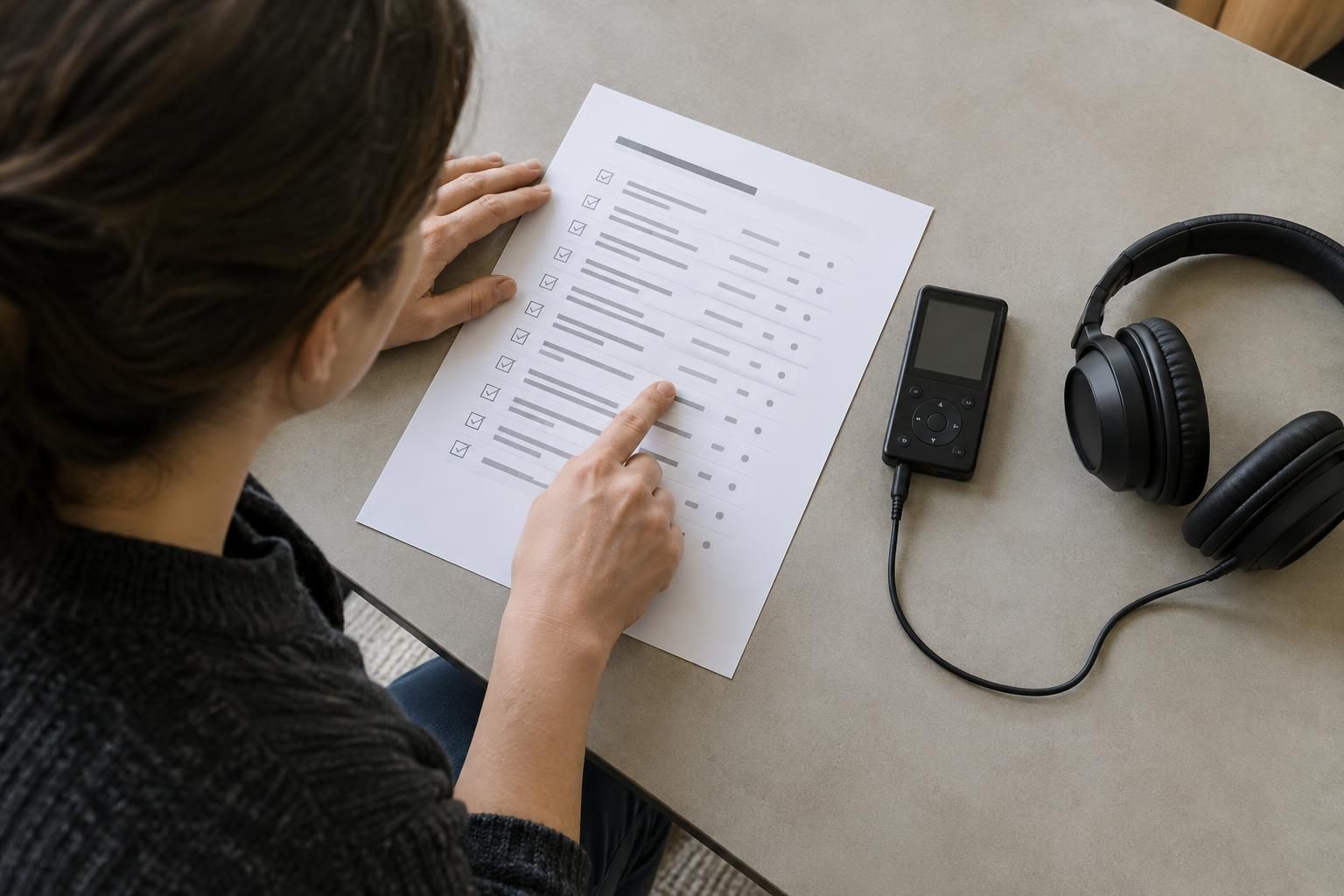
Before delivering music, compare the release form with one approved track list and the final audio files. Confirm artist-name spelling, contributor roles, track order, titles and version labels, then check the distributor’s current field instructions. Treat uncertain credits as questions to resolve—not guesses to submit. This catches preventable inconsistencies without confusing release metadata with proof of authorship, ownership or rights clearance.
Separate the data from the audio
Metadata is the information attached to a release: artist and contributor names, track titles, roles, version labels and other fields requested by a distributor. It is not the music file itself, and it is not a rights determination. A correct credit can help identify who contributed, but it does not by itself establish ownership or permission.
Keep a single approved track list as the reference for release forms, artwork text and internal records. If different people edit separate copies, small variations can spread: a featured artist may appear on one track but not another, or an alternate version may inherit the main version’s title without a distinguishing label.
- Assign one person to maintain the approved track list.
- Record the source of each name or role confirmation, and mark unresolved fields instead of guessing.
Standardize artist and contributor identities
Artist identity includes the exact public-facing name and how it is credited on each track. Ask the artist or authorized representative to confirm spelling, capitalization, spacing and whether a collaborator should receive an artist credit, a featured credit or a different contribution credit. Avoid treating a platform profile match as proof that the name is correct for this release.
Contributors may include songwriters, producers, performers and other participants. Use the roles the distributor actually provides, and do not force a person into a category that misstates their work. If a field is unclear, check the distributor’s definition before delivery. Keep the decision and its source in your release records, especially when a team member submits the data on someone else’s behalf.
- Compare names across the approved track list, release form and artwork proof.
- Flag different spellings or role descriptions for confirmation rather than silently standardizing them.
Make titles and versions match the files
A title should identify the recording the listener is meant to find, while a version label distinguishes a materially different mix or edit when needed. Compare each entered title with the final audio filename, track sequence and release materials. Check punctuation and featured-artist wording consistently; a title that changes between fields can make the release harder to recognize or manage.
For a release with multiple versions, maintain a clear mapping between each audio file and its title in the track list. Do not assume that a filename alone will become the public title, or that a distributor will infer which mix is which. The composition is the underlying musical work; the sound recording is a particular recorded performance and production. Metadata should identify the intended recording without implying that the two are the same asset.
- Read the list from top to bottom while opening or listening to the corresponding final files.
- Check that version labels are useful and consistent, not simply copied from temporary session filenames.
Reconcile the release form before submission
Use a deliberate comparison pass rather than relying on memory. Put the approved track list beside the release form and any artwork proof. Check each track’s position, title, artist display and contributor information. Confirm that no draft title, placeholder name or obsolete version remains in any document.
Then inspect fields that have their own provider-specific meaning. Distributors may request information in different ways, and their current instructions govern how to enter it. A distributor handles delivery of release information and audio to services; that is not the same function as publishing administration, which concerns administering composition-related rights and records. Neither should be assumed to resolve every credit, ownership or royalty question automatically.
- Keep a dated copy of the approved metadata and the submitted version.
- Ask the distributor about unfamiliar fields or validation warnings before changing data to make a form pass.
Handle uncertainty as a correction task
If collaborators disagree about a credit, role or name, pause that field and identify who can confirm it. Do not use a metadata edit to settle a dispute about authorship or ownership. Those are separate questions, and ownership can depend on records and agreements beyond the release form. Where rights are unclear, consult the relevant rights administrator, publisher or qualified adviser.
If an inconsistency appears after submission, document the exact field, track and intended correction, then follow the distributor’s current correction process. Check how the corrected information appears in the distributor’s account and on relevant services; do not assume one edit updates every connected record. For a simple release with one approved artist and track, a short checklist and one careful comparison may be enough. Next, create that single reference track list and verify it against the provider’s instructions before delivery.
Pre-delivery metadata checks
- Match the artist and contributor names to the spellings each person has approved.
- Confirm the title and version label against the final audio and release plan.
- Check that every contributor’s role is accurate and consistently entered.
- Compare the metadata in the release form with the approved track list and artwork text.
- Review the distributor’s current field definitions and delivery requirements before submission.
Questions about this approach
Will my distributor automatically collect every royalty?
Not necessarily. A distributor collects and delivers the release information required for its service, but provider fields and downstream displays can differ. Confirm the current instructions and inspect the delivered information where practical.
Does an ISRC prove that I own the music?
No. An ISRC identifies a particular sound recording for tracking purposes; it does not establish who owns the recording or the underlying composition. Keep rights records separately and verify them with the relevant parties.
Does a cover-song license clear a recording for video?
A cover-song license and a synchronization clearance address different uses and rights questions. Do not assume one clears the other, or that it covers samples. Review the actual recording, composition, intended use and relevant rights holders with an appropriate adviser.
For help applying this approach, explore our label and distribution services.
Discuss your music project with One World Media
Tell the team about your project, its current stage and the support you need. Contact One World Media, or call (307) 200-8139.